
The Height Hazard
Falls from height remain one of the leading causes of workplace fatalities. A fall from as little as 2 metres can be fatal depending on the landing surface and body position. In South Africa, working at height is regulated by the Construction Regulations and General Safety Regulations, which mandate specific controls including, where necessary, fall protection equipment.
Fall protection is not just about wearing a harness. It is a system comprising the anchor point, connecting device, body support, and rescue plan. Each component must be correctly specified, installed, inspected, and used. A failure at any point in the system can be catastrophic.
The Hierarchy of Fall Protection
Before specifying personal fall protection equipment, consider the hierarchy of controls. Eliminate the need to work at height where possible. Use passive systems such as guardrails and barriers as the primary protection. Where passive systems are not feasible, use collective fall arrest such as safety nets. Personal fall protection (harness and lanyard systems) is the last line of defence, not the first choice.
When personal fall protection is required, distinguish between fall restraint and fall arrest. Fall restraint systems prevent the worker from reaching a position where a fall could occur. Fall arrest systems allow the fall to occur but safely stop it, limiting the forces on the body to survivable levels. Fall restraint is preferred where feasible.
Harness Selection and Fitting
Full-body harnesses are the only acceptable form of body support for fall arrest. Waist belts and sit harnesses alone can cause serious injury in a fall through the “submarining” effect. Harnesses must meet EN 361 or SANS 50361 standards.
Key harness features include dorsal D-ring for fall arrest attachment, sternal D-ring for work positioning or rescue, adjustable leg straps, shoulder straps, and chest strap. Padding on the leg straps and shoulder straps improves comfort during extended wear. Quick-connect buckles speed donning and doffing.
Proper fitting is essential. A harness that is too loose can allow excessive fall distance and may result in the worker falling out of the harness. A harness that is too tight restricts movement and causes discomfort. Train every harness wearer on correct fitting — the leg straps should be snug enough to fit a flat hand underneath but no more.
Lanyards and Energy Absorption
Connecting devices include energy-absorbing lanyards, self-retracting lifelines (SRLs), and rope grabs. Energy-absorbing lanyards contain a shock-absorbing pack that deploys in a fall, limiting the force on the worker to under 6kN. They are available in single-leg and twin-leg (Y-lanyard) configurations for continuous protection while moving between anchor points.
Self-retracting lifelines provide greater mobility than lanyards, automatically extending and retracting as the worker moves. In a fall, they lock quickly, minimising fall distance. SRLs are particularly valuable where workspace is limited and long lanyards could create swing-fall hazards.
Anchor Points and Structural Requirements
Anchor points are the most critical and often most neglected component of fall protection systems. An anchor point must be capable of supporting the forces generated in a fall — typically 12kN minimum for single-user anchors, or certified by a structural engineer for non-standard installations.
All anchor points should be installed by competent persons, certified by a qualified structural engineer, and clearly marked with their safe working load and inspection date. Never assume that a structural element (beam, pipe, railing) is suitable for fall protection anchorage without verification.
Inspection, Maintenance, and Rescue
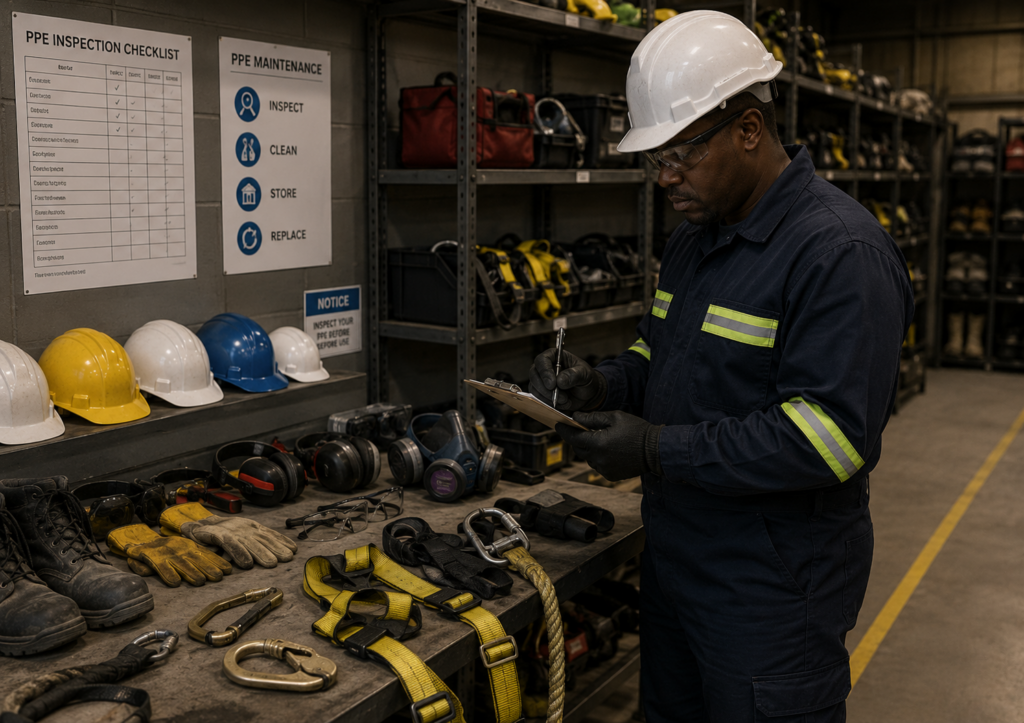
Fall protection equipment must be inspected before each use by the wearer, and periodically (typically every 6-12 months) by a competent person. Inspect harnesses for damaged webbing, worn stitching, corroded or distorted hardware, and damaged labels. Remove damaged equipment from service immediately.
A rescue plan is a legal requirement whenever fall arrest equipment is used. A suspended worker in a harness can develop suspension trauma within minutes, which can be fatal. The rescue plan must specify how a suspended worker will be reached and recovered within 15 minutes. Without a viable rescue plan, do not commence work at height.
Conclusion
Fall protection is a system, not a product. Effective height safety requires correct equipment selection, proper fitting and use, certified anchor points, regular inspection, and above all, a rescue plan. Organisations that treat fall protection as an integrated system rather than a box-ticking exercise protect their workers and themselves.