Complete food processing PPE guide for South Africa. Covers food manufacturing, packaging, beverage production and hygiene requirements. Contamination prevention and HACCP compliance.
On this page
Industry Overview
South Africa’s food processing industry is a major employer and economic contributor, spanning meat processing, dairy, baked goods, beverage production, fruit and vegetable processing, and packaged food manufacturing. The industry operates under dual regulatory frameworks — occupational health and safety under OHSA, and food safety under the Foodstuffs, Cosmetics and Disinfectants Act and Regulation 638 (R638) of 2018.
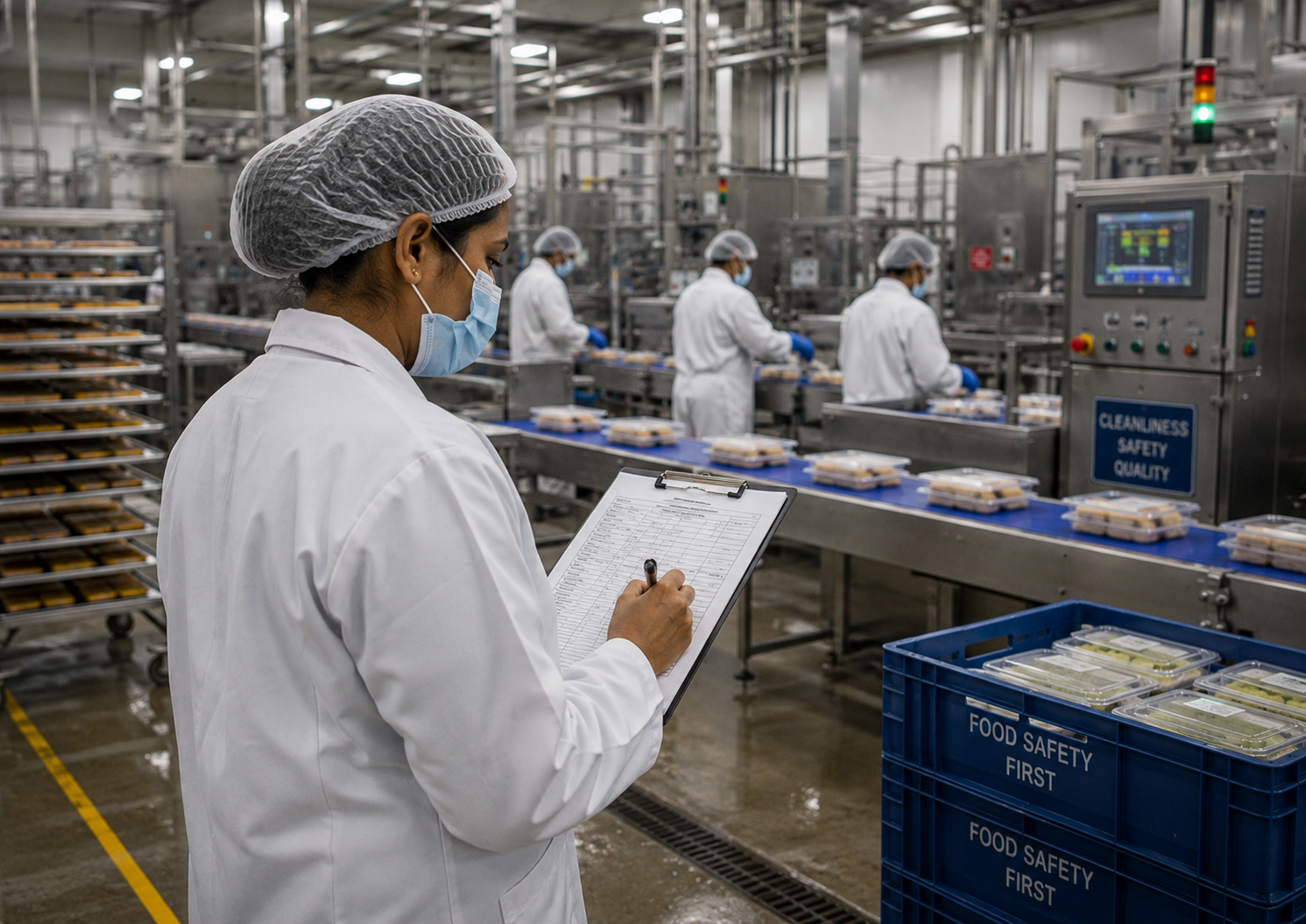
PPE in food processing serves two distinct purposes: protecting the worker from occupational hazards, and protecting the food product from contamination by the worker. This dual function means that food industry PPE must meet both safety standards and food safety requirements. Materials that shed fibres, contain allergens, or cannot be adequately cleaned are unsuitable regardless of their protective properties.
Primary Workplace Hazards
Hygiene and Contamination: Human hair, skin particles, jewellery, and street clothing can contaminate food products. Foreign body contamination is a leading cause of food product recalls and consumer complaints. PPE must act as a barrier between the worker and the food.
Contamination Prevention: Cross-contamination between raw and cooked products, between allergen-containing and allergen-free products, and between different production batches must be prevented through PPE colour-coding and zone restrictions.
Cleaning Chemicals: Caustic cleaners, acids, sanitisers, and disinfectants used in CIP (clean-in-place) systems and manual cleaning create chemical burn and inhalation hazards. High-pressure cleaning equipment creates additional physical hazards.
Slips and Falls: Wet floors from processing water, product spillage, and cleaning operations create ubiquitous slip hazards. Fat and oil accumulation on floors in meat and fried food processing is particularly hazardous.
Temperature-Controlled Environments: Cold rooms, freezers, blast chillers, and hot processing areas (cooking, pasteurisation, baking) create thermal stress hazards that require specific PPE.
Applicable South African Compliance Considerations
Regulation 638 (R638) of 2018: Regulations Governing General Hygiene Requirements for Food Premises, Transport of Food and Related Matters. This is the primary food safety regulation in South Africa. It mandates specific requirements for protective clothing, hand washing, and personal hygiene that directly influence PPE selection.
Occupational Health and Safety Act 85 of 1993: Applies to all food processing operations for worker safety. Section 8 duties include providing safe systems of work and PPE where hazards cannot be otherwise controlled.
Hazard Analysis and Critical Control Points (HACCP): While not legislation, HACCP is the internationally recognised food safety management system. Most South African food manufacturers are HACCP-certified, and the system requires control of physical hazards including those introduced by PPE (buttons, clips, detachable parts).
SANS Standards: SANS 1381 (protective clothing), EN ISO 20347 (occupational footwear), and food-specific standards for glove materials and migration testing.
Legal vs Best Practice: R638 mandates specific hygiene PPE. OHSA mandates safety PPE. Best practice combines both into an integrated programme that protects workers and products simultaneously.
Recommended PPE Matrix
| PPE Category | Recommended PPE |
|---|---|
| Head Covering | Hair nets or head coverings |
| Protective Clothing | Food-safe garments |
| Foot Protection | Slip-resistant footwear |
| Hand Protection | Food-grade gloves |
| Respiratory Protection | Where required by process |
| Eye Protection | Chemical splash protection where required |
| Hygiene PPE | Disposable PPE where required |
Detailed PPE Selection Matrix
| Hazard | Recommended PPE | Relevant Standards | Inspection Frequency |
|---|---|---|---|
| Hair contamination | Hair net (bouffant cap) covering all hair; beard snood where applicable | R638 requirement | Per entry |
| Clothing contamination | Food-safe overalls, smocks or coats; no external pockets above waist; no buttons | R638 / HACCP | Daily |
| Slips (wet / oily floors) | Slip-resistant (SRC-rated) occupational or safety footwear, white or light-coloured | EN ISO 20347 / EN ISO 20345 | Daily |
| Hand contamination / cuts | Food-grade gloves: nitrile, vinyl, or latex (allergen considerations); cut-resistant liners for knife work | EC 1935/2004 (food contact) | Per task / per batch |
| Chemical cleaning | Chemical-resistant gloves, face shield or goggles, chemical-resistant apron | EN 374 / EN 166 | Daily |
| Cold storage | Thermal clothing, cold-store gloves, insulated footwear | EN 342 / EN 511 | Daily |
| Steam / hot surfaces | Heat-resistant gloves, steam-resistant apron | EN 407 | Daily |
| Product dust / vapour | FFP2 respirator where occupational exposure limit exceeded | SANS 50149 / EN 149 | Daily; fit test annually |
Hazard Assessment Process
Food processing hazard assessment integrates food safety and worker safety:
HACCP Hazard Analysis: Identifies biological, chemical, and physical hazards in the food process. PPE must not introduce physical hazards (detachable parts, loose fibres) and must prevent the worker from introducing biological or chemical hazards.
Occupational Risk Assessment: Conducted under OHSA, identifying hazards to the worker including chemicals, slips, temperature extremes, noise, and machinery.
Zone Assessment: Different production zones (raw intake, processing, cooking, packaging, dispatch) have different contamination risks and different worker safety hazards. PPE requirements may vary by zone, often managed through colour-coding.
Cleaning Operation Assessment: CIP systems and manual cleaning use concentrated chemicals at high temperatures. This is often the highest-risk activity in a food processing facility and requires specific chemical-resistant PPE.
PPE Hierarchy of Control
Food processing applies the hierarchy with food safety overlay:
Elimination: Design processes to minimise manual handling of open product. Automate high-risk tasks.
Substitution: Replace hazardous cleaning chemicals with less aggressive alternatives. Replace manual cleaning with CIP systems where possible.
Engineering Controls: Anti-slip flooring. Local exhaust ventilation for cooking fumes and chemical vapours. Machine guarding. Temperature control systems.
Administrative Controls: Cleaning schedules. PPE colour-coding by zone. Changing protocols between raw and cooked areas. Hygiene training. Lock-out/tag-out for maintenance.
PPE: Hair nets and protective clothing prevent product contamination. Slip-resistant footwear prevents falls. Chemical-resistant PPE protects cleaning staff. Thermal PPE protects cold store and hot process workers.
PPE Selection Guidance
Food-Safe Clothing: Must be made from non-shedding materials. No external pockets above the waist (prevents items falling into product). No buttons — press studs or zips preferred. Light colours (white, light blue) to show soiling. Colour-coding by zone is best practice (e.g., white for cooked product area, blue for raw). Must be washable at 60°C+ for hygiene.
Hair Nets: Must completely contain all hair including sideburns and neckline. Metal-detectable hair nets are available and recommended for facilities using metal detection as a CCP. Beard snoods are mandatory where facial hair cannot be shaved. R638 specifically requires hair covering in all food handling areas.
Gloves: Food-grade nitrile is the most versatile option — resistant to oils, greases, and many chemicals, latex-free (reducing allergy risk), and available in metal-detectable versions. Change gloves between tasks, when torn, and at minimum intervals defined by the hygiene plan. For knife work, cut-resistant liners under food-grade gloves provide slash protection.
Footwear: White or light-coloured footwear is the food industry standard to show soiling. SRC-rated slip resistance is essential for wet and oily floors. Some facilities require Wellington boots for heavy washdown areas. Safety toe caps may be required in areas with heavy container handling — specify EN ISO 20345 with white/light colour options.
Common Compliance Mistakes
1. Street Clothes in Production: Workers wearing street clothing under overalls, or not changing out of street clothes before entering production. R638 requires protective clothing to be provided and worn.
2. Inadequate Hair Containment: Hair nets that do not cover all hair, or workers removing hair nets during breaks and not replacing them correctly. This is a direct R638 violation and a major contamination risk.
3. Wrong Glove Material: Using non-food-grade gloves (e.g., mechanics’ gloves) in food handling areas. These may contain chemicals that migrate into food and are not approved for food contact.
4. No PPE for Cleaning Staff: Cleaning staff working with concentrated caustic and acid solutions without chemical-resistant gloves, face shields, or aprons. Cleaning is often the highest-risk activity in the facility.
5. Cross-Contamination via PPE: Workers moving between raw and cooked areas without changing PPE. Colour-coded PPE by zone with designated changing points prevents this.
6. Jewellery Not Controlled: R638 prohibits jewellery in food handling areas (wedding bands excepted if they cannot be removed). Watches, earrings, necklaces, and bracelets must be removed.
PPE Inspection & Maintenance Guidance
Daily (Worker): Check protective clothing for damage and soiling. Verify footwear is clean and slip-resistant. Check gloves for tears before each use. Confirm hair net is secure and complete.
Per Wash Cycle: Food-safe garments must be laundered at 60°C minimum. Industrial laundry with HACCP-compliant processes is preferred. Replace garments that show wear, fading, or damage.
Monthly (Management): Audit PPE compliance across all production areas. Review contamination incident data for PPE-related trends. Assess glove consumption rates against specification. Replace worn communal PPE (aprons, thermal wear).
Record Keeping
Food processing facilities must maintain:
- HACCP plan with PPE as a prerequisite programme
- R638 compliance records including protective clothing provision
- PPE issue and laundry records
- Training records for hygiene and PPE use
- Foreign body incident investigation records
- Supplier certificates for food-grade PPE materials
Compliance Responsibilities
Employer: Provide food-safe PPE meeting both safety and food safety requirements. Implement colour-coding by zone. Ensure laundry processes maintain hygiene. Train workers on both safety and hygiene aspects of PPE. Monitor compliance with R638 and internal standards.
Employee: Wear specified PPE correctly. Change PPE when moving between zones. Report damage and contamination. Maintain personal hygiene. Remove jewellery before entering production. Not wear street clothing in production areas.
Frequently Asked Questions
Q: Can workers wear jewellery in food processing areas?
R638 prohibits all jewellery except plain wedding bands that cannot be removed. Earrings, necklaces, watches, bracelets, and body piercings must be removed or covered.
Q: How often must food-grade gloves be changed?
Gloves must be changed when torn, when changing tasks, after handling raw materials before handling cooked products, and at intervals defined by the facility’s hygiene plan. Typically every 1-2 hours of continuous use, or between batches.
Q: Are fabric gloves acceptable in food processing?
Generally no. Fabric gloves shed fibres, cannot be effectively sanitised, and can harbour bacteria. Food-grade nitrile, vinyl, or approved cut-resistant liners are the acceptable options.
Q: Must the employer provide laundering of protective clothing?
Yes. R638 requires that protective clothing be kept clean. Most facilities provide on-site or contracted industrial laundry services to ensure hygiene standards are maintained.
Key Takeaways
- Food processing PPE must protect both workers and food products
- R638 mandates specific hygiene PPE requirements
- All PPE must be food-safe — non-shedding, no detachable parts, cleanable
- Colour-coding by zone prevents cross-contamination
- Slip-resistant (SRC) footwear is essential for wet and oily floors
- Cleaning operations often require the highest level of chemical-resistant PPE
- Metal-detectable PPE options are available for facilities with metal detection CCPs
- Integrated worker safety and food safety training is essential
Need Food Industry PPE Solutions?
Sheq Safety supplies food-grade PPE including hair nets, food-safe protective clothing, metal-detectable gloves, slip-resistant footwear, and chemical-resistant cleaning PPE. We understand the dual requirements of worker safety and food safety compliance. Contact our team for food industry PPE solutions.
Recommended Catalogues
Related Knowledge Articles
 Site Safety
Maintaining and Inspecting Your PPE: A Practical Protocol
Extend the life of your safety equipment and ensure consistent protection with proper inspection, cleaning, storage,…
 Hand Protection
: A Comprehensive Guide to Industrial Gloves
Selecting the right gloves for chemical, mechanical, thermal, and electrical hazards — with cut resistance ratings,…
 Eye & Face
Eye and Face Protection Standards in South Africa
A detailed look at SANS and EN standards for safety eyewear, including impact ratings, optical classes,…